

Stories & Insights
Art Across the Building Lifecycle: 4 Stages From Construction to Occupancy
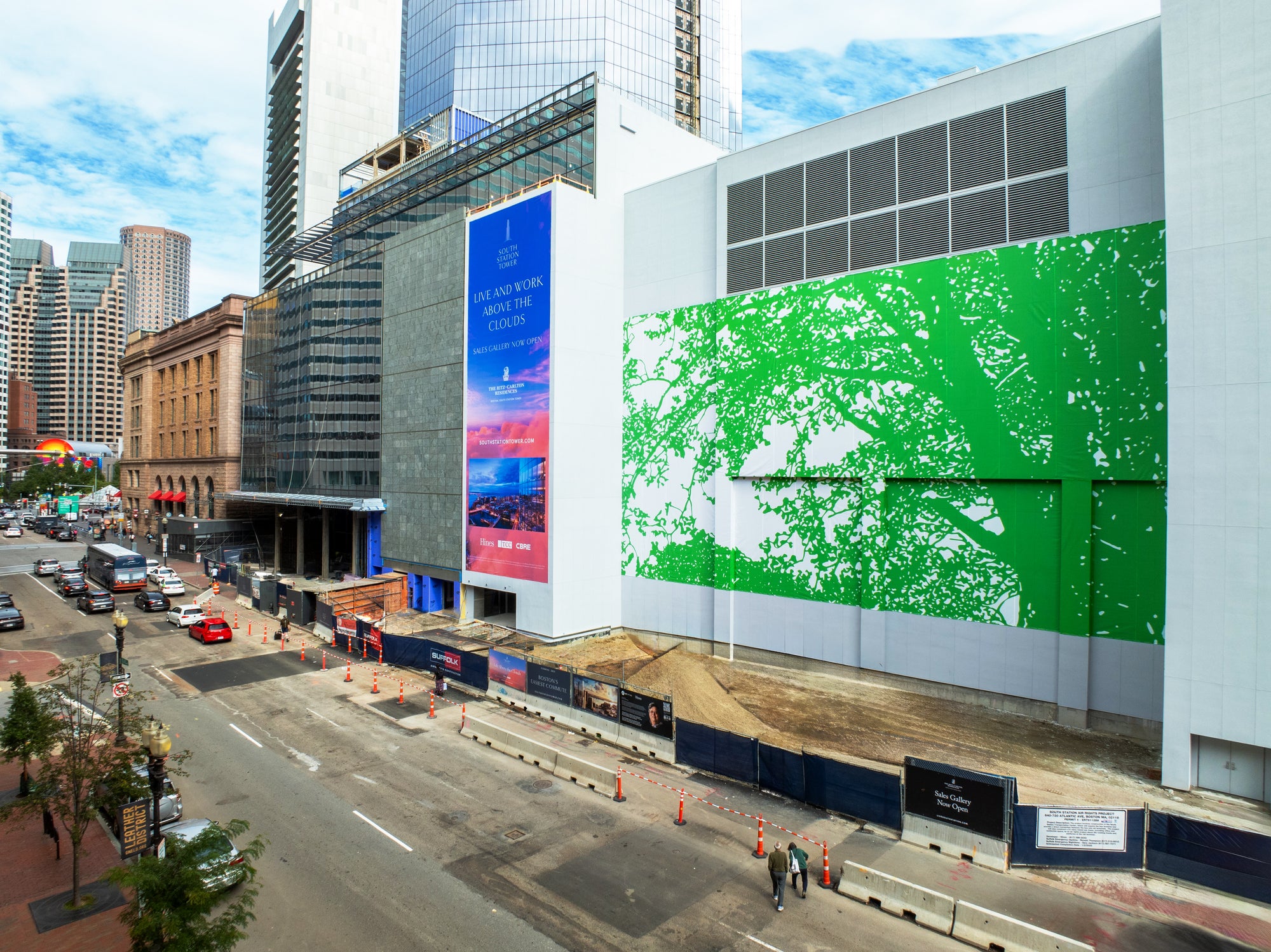
Image: Aerial view of Atlantic Avenue and South Station Tower with Allen Chamberland's Emerald Tree on the building facade.
Art creates value at every stage of a property's life, long before a building opens and long after tenants move in. ArtLifting treats that lifecycle the way asset managers treat their portfolios, considering art across development and construction, leasing, tenant experience, and operations.
The result is an art program designed to create value stage by stage, in real projects. Every ArtLifting installation also creates economic opportunity for artists with disabilities.
Highlights
- Art creates value at every stage of a building's life, from activating a construction site to keeping an occupied space evolving long after move-in.
- Hines, BentallGreenOak, WS Development, Trammell Crow Company, and JRM Construction Management all invest in art as part of their real estate strategy.
- Flexible rentals and rotating collections keep spaces active, with turnkey programs and no added inventory burden for owners or asset managers.
- Because ArtLifting artists earn 55% of profits, every installation also creates economic opportunity for artists with disabilities.
1. Development & Construction: Construction sites become part of the community
Before a building opens its doors, it has already begun shaping how a community experiences it.
Communities and cities often treat construction sites as temporary disruptions. Through construction scrims, murals, public art, site-specific installations, and other art interventions, developers can turn work sites into platforms for storytelling, placemaking, and community engagement.
Art creates positive experiences while a project is taking shape, building goodwill and anticipation before leasing and occupancy begin.
South Station is one of Boston's busiest transit hubs and a historic landmark in its own right, which raised the stakes for how construction there would affect the community. Left as a blank barrier, the site risked becoming a years-long eyesore for the tens of thousands of commuters and neighbors who passed it every day, coloring perceptions of the tower and disrupting the properties around it. At Hines' South Station Tower in Boston, ArtLifting partnered with Hines and Pelli Clarke & Partners to transform a 6,500-square-foot construction scrim into a large-scale public art installation featuring Emerald Tree by Boston artist Allen Chamberland instead. The installation engages more than 75,000 commuters, residents, and visitors each day while celebrating local talent and creating economic opportunity.
For Chamberland, seeing his work at that scale, in a place he passes through himself, was its own milestone:
"It's going to be amazing to see my artwork at a huge scale in a public space I frequent. It's an incredible honor to be selected for this project and I am thrilled to share my love for our city and its vibrant community through my art."
— Allen Chamberland, ArtLifting artist
The project shows how a temporary structure becomes a platform for social value, offering a source of civic pride and strengthening the connection between a property and the community it will serve.
"We are proud to partner with ArtLifting to showcase the incredible work of Allen Chamberland at South Station Tower. Our longstanding relationship with ArtLifting underscores our commitment to championing diverse and local artists. This collaboration brings a unique, larger-than-life mural to the building, providing beautiful public art for everyone to enjoy."
— Sean Sacks, former Senior Managing Director, Hines
Flexibility carries into the finished project, too. Developers and asset managers don't have to choose between temporary and permanent. A project can have a signature piece where a space calls for a lasting centerpiece, while using rented or rotating installations where flexibility matters more.
That same principle carries into leasing, where art gives prospective tenants something concrete to picture before they ever sign.


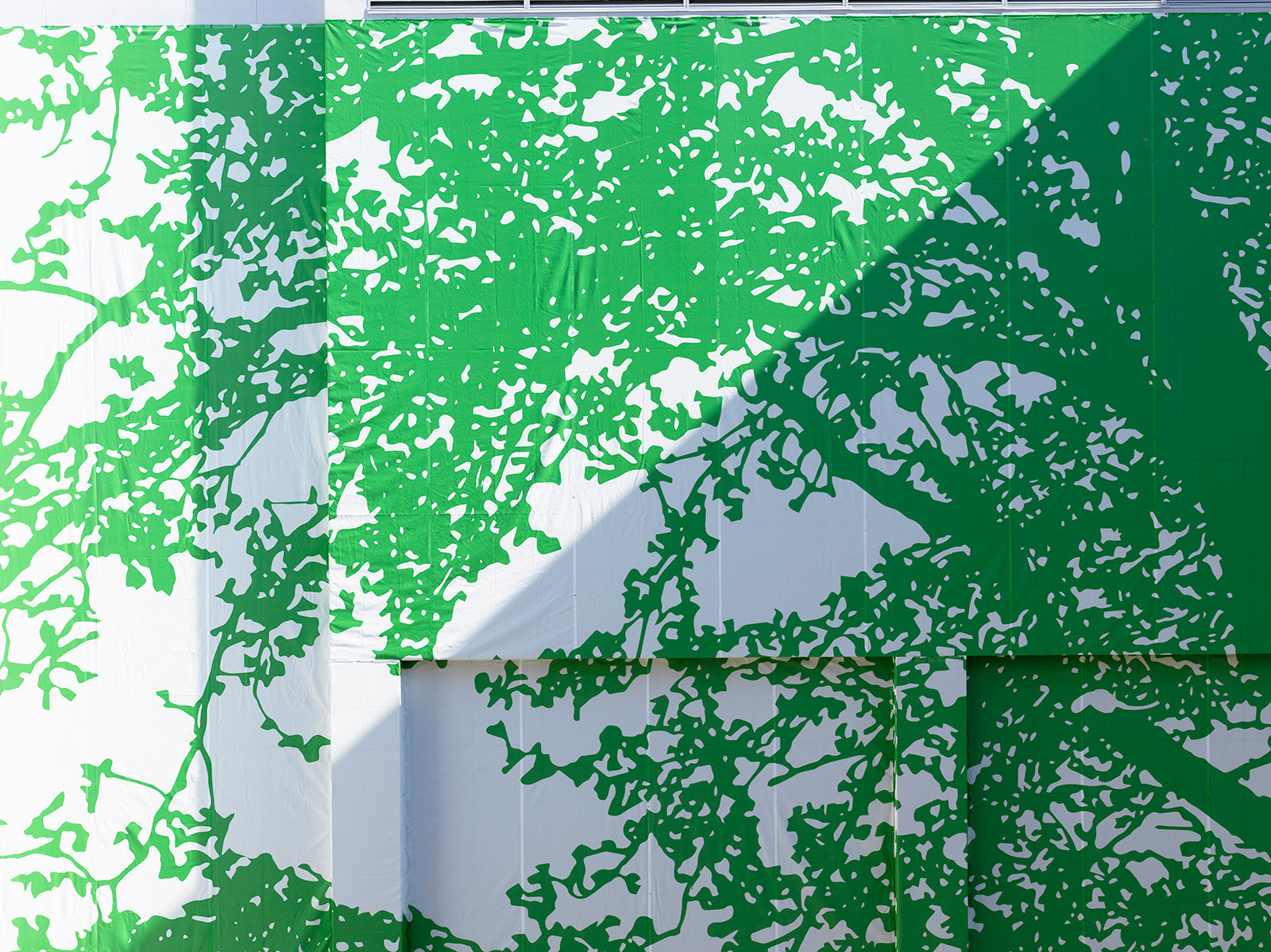

Image 1: Aerial view of Atlantic Avenue and South Station Tower with Emerald Tree on the building facade.
Image 2: Allen Chamberland holding up his original papercut artwork across the street from the largescale reproduction.
Image 3: Sidewalk view on Atlantic Avenue of Emerald Tree and South Station Tower.
Image 4: Emerald Tree from a street view upwards with South Station Tower in the background.
Image 5: A detail of the custom scrim wrapping around features of the building.
2. Leasing & Property Differentiation: Tenants choose spaces they can picture themselves in
Leasing is about helping prospective tenants imagine themselves in a place. Art provides a first impression to remember: what it would actually feel like to work, meet clients, or spend a day there. Across a portfolio, art helps leasing teams communicate character and shared values before a tenant ever signs.
Trammell Crow Company developed 440 Bedford, a 310,000-square-foot, six-story Class A building for life-sciences tenants in Lexington, Massachusetts. ArtLifting curated a collection by five artists, including work by former scientists and pieces exploring scientific themes, giving the building a visual identity that speaks directly to the tenants touring it and connects the work happening in the labs to the environment around it.
"Our design approach is very focused on placemaking. The artwork should provide an enhancement to and additional layer of depth for the branding and marketing of the project. Partnering with ArtLifting created that personalized touch and allowed us to have an open dialogue about what the project's goals were and how the artwork could support that. The artwork, as well as the artist's story, provides a valuable addition and deeper connection, not only to the artwork but also to the fingerprints of the artist. ArtLifting has been a great partner, and I look forward to working with them again."
— Mark Shraiberg, Vice President, Development Management, Trammell Crow Company
Rental and rotation programs let a property's art align with the rhythm of its occupancy, refreshing a space as tenants renew, expand, or turn over without the capital outlay of a permanent acquisition, so leasing-ready spaces stay active and intentional for every tour.
Once tenants arrive, art creates places where people want to stay, connect, and return.


Image 1: Curved white wall displaying Sailor's Delight and Red Sky Night by Suzanne Hellums, featuring blue wave-like designs with a red sky above.
Image 2: Wood-paneled wall featuring Hutchman 31 by Jacob Brown, a wide abstract painting in neutral tones. A glowing textured panel sits to the left, adding warm light.
Image 3: Open lounge with round tables, tall stools, booth seating, and a shuffleboard table under an exposed ceiling.
Image 4: Elevator area with two stainless steel doors set into a curved wall of vertical wooden slats. Han Huisman's Abstract 2024-0519-6 hangs on the adjacent white wall.
3. Experience & Connection: Connection is what brings people back
The most successful places create more than activity. They create connection.
For owners, operators, and tenants, the goal is not simply activity. It is creating places people want to spend time in and return to.
In a lobby, shared lounge, plaza, café, wellness space, or other tenant amenity, thoughtfully integrated art transforms everyday environments into places that encourage conversation, foster belonging, and strengthen community.
ArtLifting's partnership with BentallGreenOak (BGO) spans more than 800,000 square feet of owned assets and corporate spaces across the United States. Each location reflects its own identity while contributing to a cohesive portfolio-wide experience.
"ArtLifting has been a strong partner in enhancing the day-to-day experience within our buildings through art installations. The stunning artwork and inspiring artist stories create meaningful connections for BGO teams and tenants."
— Rob Naso, Managing Partner and Head of U.S. Asset Management, BGO
ArtLifting’s approach carries into large-scale commercial developments, too. At 400 Summer Street in Boston's Seaport District, a 630,000-square-foot, LEED Platinum-certified building anchored by life-sciences tenants with ground-floor retail, WS Development partnered with ArtLifting to curate original artwork and large-scale commissioned installations throughout the building.
WS Development envisioned more than an office building, using art to create a visual landmark. Here, art fosters community, belonging, and meaningful connections for tenants, visitors, and the surrounding neighborhood. The collection features work by local Boston artists Christina Constantine, Rudolph Jean-Louis, and Scott Benner, reinforcing the building's identity while creating moments of joy and reflection throughout its shared spaces.
"We hope these incredible works of art give people a moment of joy, a moment of pause, a moment of reflection on a day-to-day basis, and help forge an emotional connection to the place they're passing through or working in every day."
— Yanni Tsipsis, Senior Vice President, WS Development


Image 1: A modern lounge at BGO's 777 6th St. NW features Karade’s Sankofa I and Karade’s Sankofa II by ArtLifting artist Diyah Najah.
Image 2: A seating area at BGO's 777 6th St. NW. features two prints by ArtLifting artist Kari Souders and one by Diana de Avila.
Image 3: Artist Rudolph Jean-Louis stands in front of his commissioned artwork at WS Development 400 Summer St. Photography by Eric Levin
Image 4: Two of Christina Constantine’s original artworks hang in an elevator lobby on the second floor of 400 Summer St. © Vaderwarker Photography.
4. Operations & Activation: A place keeps its value by evolving
A place is never really finished; it evolves. The properties that maintain their value and relevance are the ones that stay active and feel alive long after the ribbon-cutting.
Art offers a flexible way to keep a space active. Rotating collections give a lobby, amenity floor, or shared space renewed energy without renovation, so a property keeps feeling new and exciting to the tenants who see it every day and the prospects touring it for the first time.
Property management and facility teams are often the first people tasked with keeping a space engaging, but they shouldn't have to become art managers on top of everything else. Because these art programs can be delivered as rentals and rotations, ArtLifting partners get activation without owning or managing art as an asset: no acquisition budget to defend, no inventory to track, no collection to maintain or insure. ArtLifting handles curation, installation, rotation, and refresh as one managed program, so that work never lands on the property teams.
At JRM Construction Management's New York headquarters, that model is already at work. Alongside a signature commission, Diamond Dream, a sculptural installation by artist Eliza Redmann built from 140 gold acrylic pyramids, ArtLifting also runs a rental program across two floors. That rental structure supports refreshes over time, without JRM taking on the long-term management, insurance, or overhead of a permanent collection.
The result is a space that stays active through every stage of its life, and an art program that scales up or down as the building's needs change.
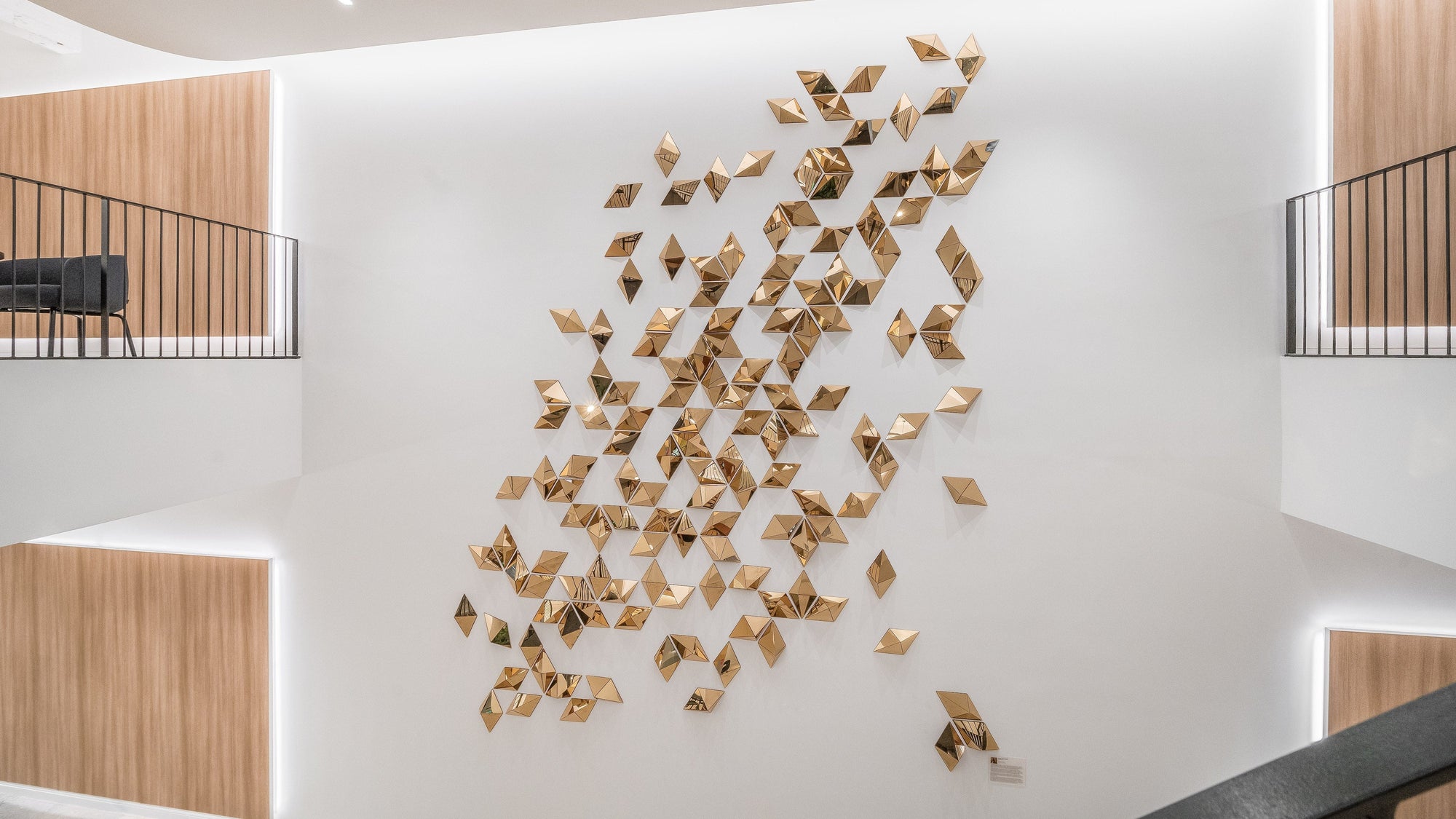


Image 1: Eliza Redmann’s sculptural wall installation, Diamond Dream, graces the lobby of JRM with its striking presence.
Image 2: Diamond Dream from the perspective of the second-floor loft.
Image 3: Diamond Dream from below, showcasing the height and scale.
Art is an ongoing asset strategy, not a one-time decision
From a construction scrim to a rotating art collection in a lobby, art plays a different role at every stage of a property's lifecycle: it turns construction into community engagement, makes a space easier to imagine during leasing, creates connection once tenants arrive, and keeps shared spaces evolving over time. Through ArtLifting, that value extends beyond the property itself, creating economic opportunity for artists with disabilities along the way.
For the broader case behind this approach, and what it means for your portfolio, read the pillar piece, Why Art Is the New Competitive Advantage in Commercial Real Estate.
Connect with an ArtLifting Art Advisor to build an art program that creates value at every stage of your building's lifecycle, for the people who use your spaces and the artists who make the work.
You may be interested in...


